Description
The subject where being out of date is dangerous
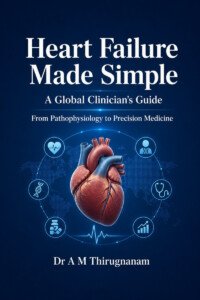
Heart failure has changed more in ten years than any other area of cardiology. Four-pillar therapy, SGLT2 inhibitor evidence across the ejection fraction range, the end of therapeutic nihilism in HFpEF, redefined device candidacy — a clinician working from older material is not slightly behind, they are managing a condition that has since been redefined.
This collection exists to close that gap for physicians who carry heart failure as part of a general workload rather than as a subspecialty.
Therapy under real constraints
Naming the four pillars is easy. The clinical difficulty is sequencing them in a patient whose blood pressure is 96 systolic, whose creatinine is rising, who cannot afford all four, or for whom one is simply unavailable in the local formulary — which is the ordinary situation across much of the world.
The collection treats therapy as that problem: which agent first, how fast to titrate, what to accept, and which pillar to sacrifice when all four cannot stand.
Coverage
Diagnosis and phenotyping, including natriuretic peptide thresholds that shift with obesity and atrial fibrillation, and the echo criteria separating HFpEF from its mimics. Acute decompensation — congestion phenotypes, diuretic strategy including sequential nephron blockade, the rising creatinine that signals success rather than injury, and recognition of low output masquerading as simple decompensation. Device candidacy against DANISH-era evidence. Cardiac contractility modulation.
The referral decision
Advanced therapy referral is given its own treatment because it is a timing decision, and because outcome depends heavily on referring before end-organ damage rather than after. For members without transplant or mechanical support locally, knowing when to start the conversation is more useful than knowing how the therapy works.
Comorbidity chapters cover renal disease, iron deficiency, atrial fibrillation, amyloid and diabetes.
Access
PDF collection, lifetime access, from CardiologyBooks.com.