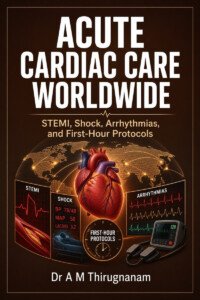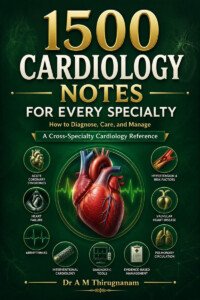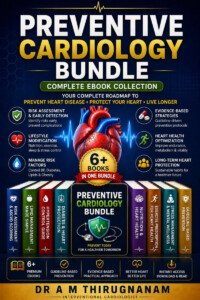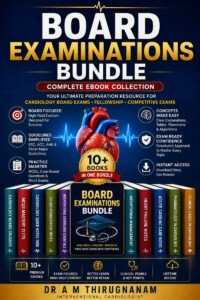
Description
Examining in an unfamiliar system
A doctor sitting a cardiology board outside their training system carries a particular disadvantage that is invisible from the inside: they do not know which of their clinical assumptions are universal and which are local convention. Those assumptions are not felt as uncertainty, so they are never studied — and they are exactly what an unfamiliar examination finds.
This collection was assembled with that candidate in mind, which is why guideline provenance is stated rather than assumed.
Complete rather than supplementary
Syllabus content at examination depth, question banks with every distractor explained, and compressed revision material for the final weeks. Because the three were written together they agree with each other, which spares a candidate the weeks otherwise lost to reconciling sources that disagree on thresholds and guideline vintage.
Working pattern that suits overseas candidates
Content while still in clinical work, questions chapter-wise, then randomised sets, then timed papers in the last six weeks. Candidates preparing while working full clinical rotas — most of our directory — generally find the chapter-wise phase the only one that survives an unpredictable rota, and plan the randomised and timed phases around leave.
For
Doctors preparing cardiology board, licensing or fellowship examinations internationally, and DM, DNB and NEET SS candidates.
PDF collection, lifetime access, instant download from your World Elite Doctors account.
Built around the examination blueprint
The board examination collection is mapped to the published content weightings rather than to a textbook’s chapter order, so time is spent in proportion to how the paper is actually scored. Ischaemic heart disease, arrhythmia and heart failure carry the weight they carry in the examination, and the smaller domains are covered to the depth the blueprint asks for and no further.
For candidates sitting from outside the host country
International candidates lose marks on conventions rather than on cardiology: reporting units, guideline sources that differ between ESC and ACC/AHA, and question stems written around an unfamiliar health system. Those differences are called out explicitly wherever they change the correct answer. The collection is designed for a candidate revising alongside clinical duty, in sessions short enough to survive a working week.