Description
What experience actually consists of
Ask a cardiologist with twenty years behind them what they know that a competent trainee does not, and the answer is rarely a fact. It is a collection of small recognitions — the murmur that changes with posture, the ECG that mimics pericarditis until you check the PR segment in aVR, the creatinine rise that means the diuresis is working rather than failing, the patient who looks well and is not.
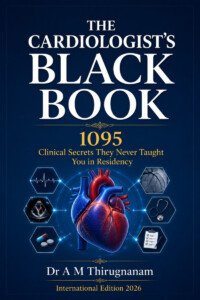
This 861-page volume collects 1,095 of them across 73 chapters, each tied to the situation in which it matters.
Why it suits doctors working without immediate backup
A large share of our directory practises where the nearest cardiologist is a phone call and a transfer away. For those clinicians the value is not the exotic diagnosis but the ordinary presentation with an atypical feature — the case where a small recognition changes whether a patient is admitted, transferred or sent home.
The complication material carries the same weight for anyone covering a unit overnight: no-reflow, perforation, retroperitoneal bleed, stent thrombosis, each written with operational specificity by an author who has had to manage them.
How it reads
Short, self-contained chapters organised by clinical domain — coronary intervention, acute care, valve disease, heart failure, arrhythmia, imaging, pharmacology, and the presentations that fit no category. The register shifts deliberately: conversational where the point is judgement, precise where the point is a number.
Level
Not an introductory text. It assumes the standard management is already known and deals with the exceptions, which makes it best suited to established clinicians and senior trainees rather than to those still building the baseline.
Access
PDF, 861 pages, lifetime access, instant download from your World Elite Doctors account.